Southampton Water
The WhaleSouthampton Water is presented as a landscape where the sea is at once indispensable and easy to overlook. For Philip Hoare, its working docks and shipping channels shaped childhood perceptions of water as infrastructure and transit; later, the estuary’s history of visiting cetaceans and his own return to swimming disclose a more intimate relationship with it.
Port, suburb, and working water
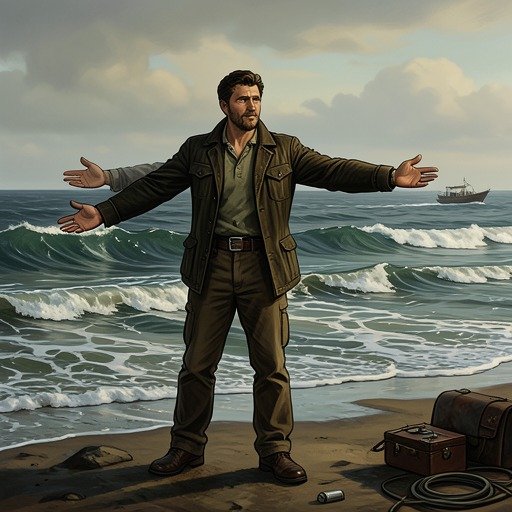
Hoare grew up in Sholing, a suburb on the far side of the Solent from the picturesque coast associated with Algernon Swinburne. Sholing’s name was a corruption of “Shore Land,” but the proximity of the water did not make it a place of leisure. Hoare’s father worked at a cable factory, testing huge insulated telecommunication lines laid along the Atlantic seabed, as though they tethered England to America. The sea reached the family home through the sounds of work: ships’ horns on foggy mornings and, at night, clanking dredgers cutting a channel for liners and container ships on Southampton Water.
That infrastructure made the estuary a place of passage rather than a destination. Everything around Hoare’s childhood home seemed oriented toward the water, yet the city appeared to ignore the sea that helped explain its existence. The tension is central to his sense of the location: Southampton Water was materially present in cables, shipping, and dredging, but could remain absent from civic attention and from the idea of the sea as a living environment.
Cetaceans in the estuary
A nineteenth-century account offers a different view of the working water. In The Picture of Southampton (1850), Philip Brannon recorded that whales and grampuses had been captured in Southampton Water, drawing the usual arrangements for sightseers on rare occasions. He also described small shoals of porpoises visiting the estuary. Visitors from inland could watch them from the quays and platform, rolling and springing near shore before disappearing and surfacing again elsewhere.
The account places animal life within the same public landscape as the harbour and its human traffic. Cetaceans were not a constant spectacle: their visits were unusual enough to prompt organized viewing. Yet the porpoises’ repeated appearances make the estuary more than a channel for ships. Its surface could also become a stage for animals whose movements briefly interrupted the routines of the port.
The sea beyond the visible surface
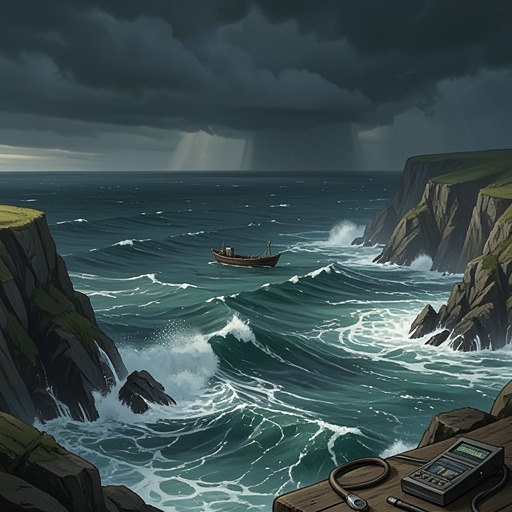
Southampton Water belongs to a sea that Hoare describes as both familiar and difficult to know. From the shore, water can appear unchanged from one day to another; sustained observation instead reveals shifting scenes, from a glassy surface that seems to join earth and sky to waves capable of taking as readily as they give. The estuary’s calm appearance therefore does not exhaust what it contains. Hoare imagines its unspoken surface as once broken by giant creatures, turning the grey water into a threshold between ordinary urban life and a much older, less manageable natural world.
This perspective also changes the meaning of the port. The sea is not simply distance to be crossed or a resource made useful by shipping. It is part of a global wilderness whose tides and shores shape human movement, even when people treat the ocean as conquered or merely as a route. Southampton Water makes that contradiction local: commercial traffic depends on the water, while the city can behave as if water and city were separate.
From childhood distance to immersion
As an adult, Hoare’s relationship with the water changes. After learning to swim while living alone in his mid-twenties, he comes to regard the sea not as an industrial boundary but as something that can bear up his body. He later swims in it whenever he can and plans around the tides in both summer and winter. From a shingly beach, he watches ferries pass and briefly join in the distance before separating again, their movement echoing the estuary’s character as a place between somewhere and nowhere.
In the water, the perspective of the port gives way to bodily immersion. Hoare lies on his back as waves wash over him, whether in the warmth of late August or the rough cold of December; the shore and the clothes left there recede from view. Southampton Water thus gathers together the strands of his changing sense of the sea: a working route heard from a childhood bedroom, a habitat visited by cetaceans, and a medium that can suspend a swimmer within a world larger than the city.